
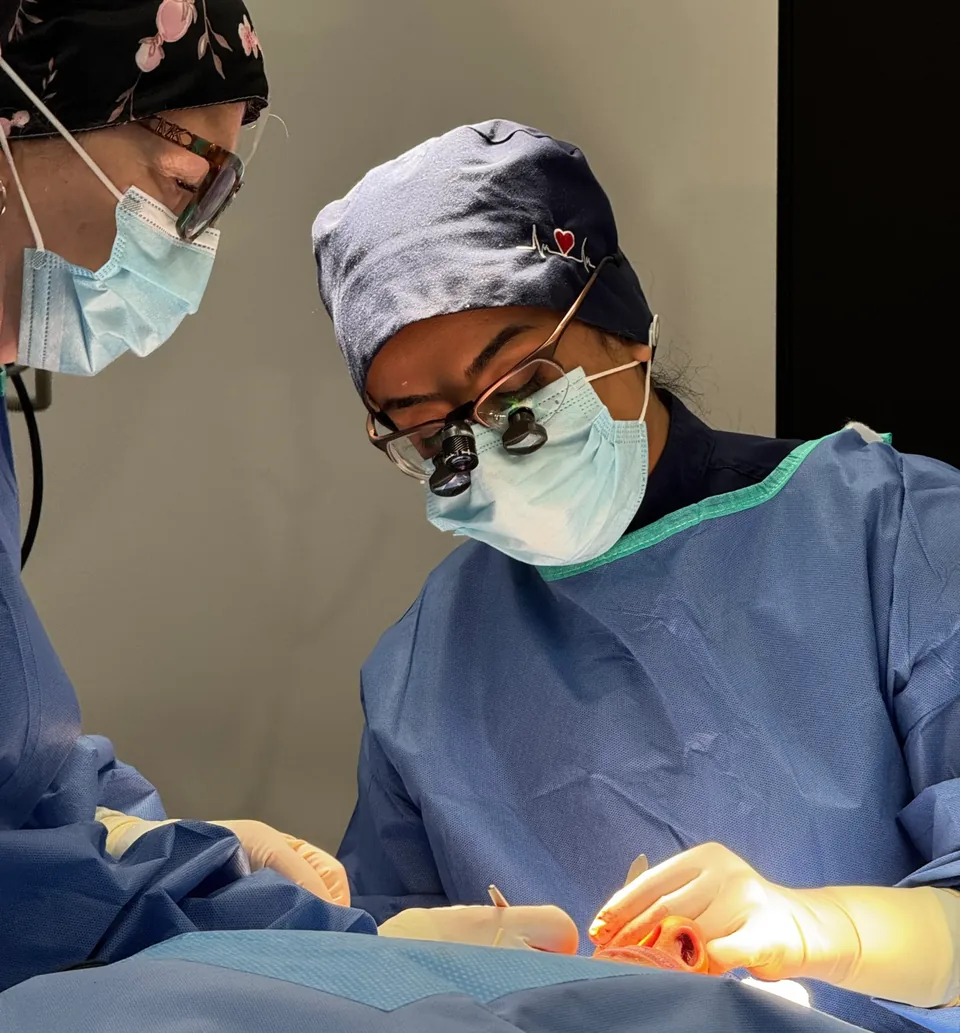
What the procedure addresses
This service addresses corneal astigmatism at the time of cataract surgery. Without correction, astigmatism persists after the operation and continues to blur vision at all distances, often leaving patients reliant on glasses even with a clear lens.
Who may be a good candidate
Candidates have measurable corneal astigmatism and an interest in reducing glasses dependence after cataract surgery. The amount and regularity of the astigmatism, along with eye health, determine whether a toric lens or another approach suits you.
What the procedure involves
Preoperative corneal measurements map the shape and cylinder of your cornea. A toric lens is selected with power matched to those measurements and aligned to a specific axis during surgery. Accurate alignment is essential to the correction working as planned.
Specialist perspective
Astigmatism correction is measurement-driven. Small errors in alignment or healing drift reduce the benefit, which is why the specialist assessment, marking technique, and follow-up all matter. Expectations about residual cylinder are set honestly before surgery.
Outcomes
Most patients experience a significant reduction in astigmatism and improved uncorrected distance vision. Some residual astigmatism can remain, and glasses may still be useful for certain tasks or lighting conditions.
Recovery and timeline
Recovery follows the standard cataract surgery course. Toric lens alignment is checked at follow-up visits, since early postoperative rubbing or rotation can affect the correction and occasionally requires repositioning.
Risks and limitations
Risks include those of cataract surgery generally, plus toric-specific considerations such as lens rotation, residual astigmatism, and measurement unpredictability in certain corneas. These are reviewed with you before surgery.