
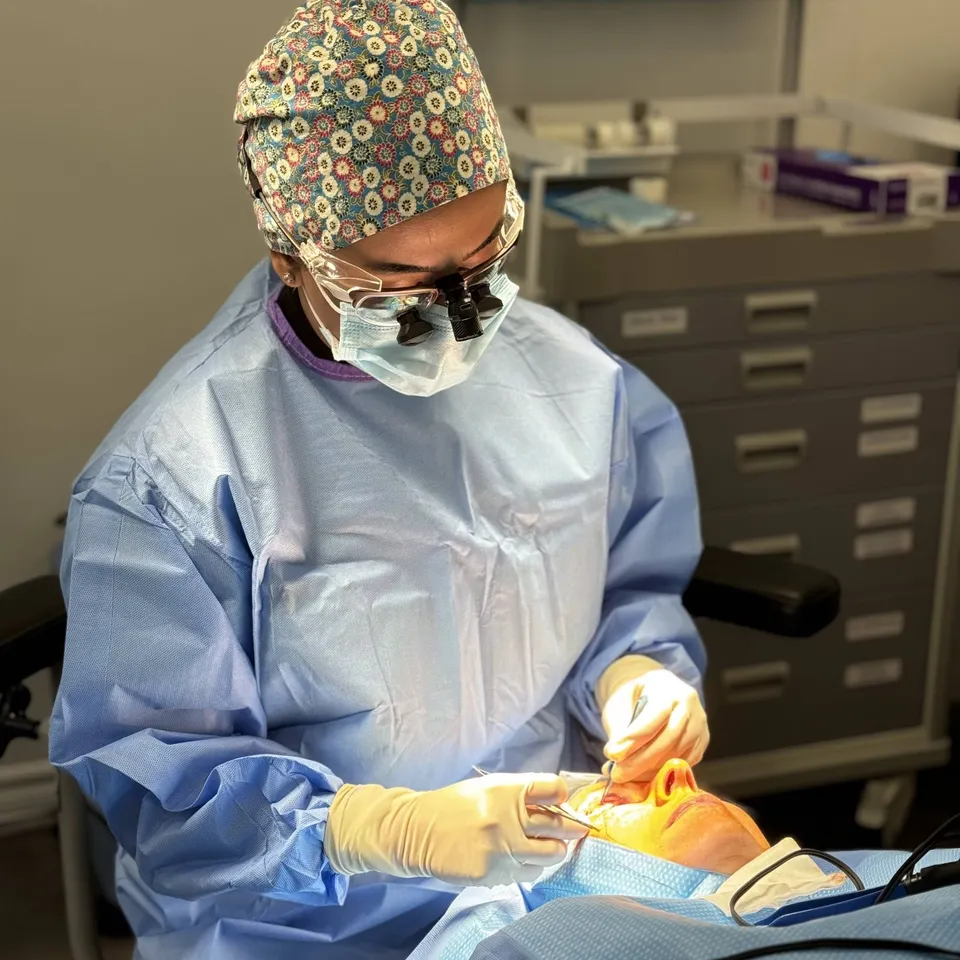
What an oculoplastic surgeon is
An oculoplastic surgeon is first an ophthalmologist, then a subspecialist with fellowship training in eyelid, tear duct, orbital, and periocular surgery. This path means the eye itself is never treated as separate from the surgery around it.
When a specialist matters
The eyelids protect the eye surface, direct the tear film, and contribute to vision. Surgery near these structures affects more than appearance. Conditions such as drooping lids, lid malposition, persistent watering, and periocular lesions all involve this overlap of function and form.
What the training involves
After medical school, the path includes ophthalmology residency followed by dedicated oculoplastic fellowship training. This combination provides experience with both the microsurgical environment of the eye area and the reconstructive and aesthetic principles of the face.
Specialist perspective
Eyelid surgery succeeds when it respects anatomy that is easy to overlook. Lid position, symmetry, tear film health, and brow posture all influence both the immediate result and long-term comfort. This is the lens an oculoplastic surgeon brings to every periocular plan.
What to expect at a consultation
A consultation includes assessment of your eyelid anatomy and eye health, discussion of your goals, and a clear explanation of the options, benefits, and limitations relevant to you. You should expect time for questions and no pressure toward any particular procedure.