What the procedure addresses
Combined upper and lower blepharoplasty addresses excess upper eyelid tissue and under-eye bags or lower lid skin excess in a single operation. Treating both areas together supports a balanced result when aging changes affect the whole eye region.
Who may be a good candidate
Good candidates have findings in both the upper and lower eyelids that surgery can address, and are in stable health. The assessment confirms that each eyelid warrants treatment and that a combined operation suits the patient’s goals and health.
What the procedure involves
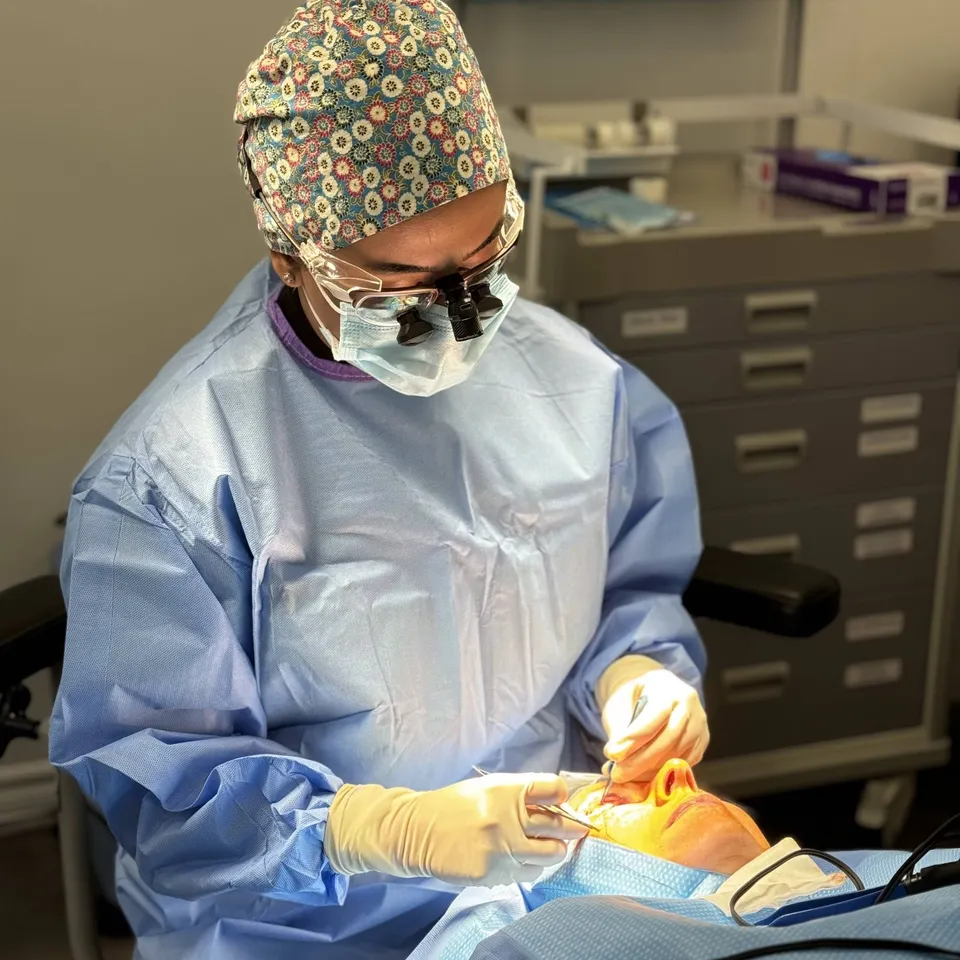
The operation combines the planned upper eyelid work with the chosen lower eyelid approach in one surgical session. Because the two areas are addressed together, the surgical plan considers how healing in one lid affects the appearance and support of the other.
Specialist perspective
Eyelids function as a pair. Planning upper and lower surgery together allows the surgeon to balance contour, lid position, and symmetry across all four lids rather than treating each in isolation. This is central to an oculoplastic approach.
Outcomes
Results develop gradually as swelling settles. The intention is a rested, open-eyed appearance with smooth harmony between the upper and lower eyelids.
Recovery and timeline
Swelling and bruising are common in the first one to two weeks and settle over the following weeks. Because both eyelids heal in the same period, there is a single recovery rather than two separate ones. Activity and follow-up guidance are individualized.
Risks and limitations
All surgery carries risks, including bleeding, infection, asymmetry, dryness, and the need for revision. A combined operation is longer than either procedure alone, and the assessment reviews whether this suits your health and goals.