
What the procedure addresses
Lower blepharoplasty addresses under-eye bags, puffiness, and excess skin in the lower eyelids. These changes often develop with age as fat support shifts and skin loses elasticity, creating a tired or heavy appearance that persists despite rest.
Who may be a good candidate
Good candidates are generally in stable health with realistic goals and lower eyelid findings that surgery can address. The assessment distinguishes true fat prominence from fluid changes, skin excess, and midface descent, because each has a different treatment path.
What the procedure involves
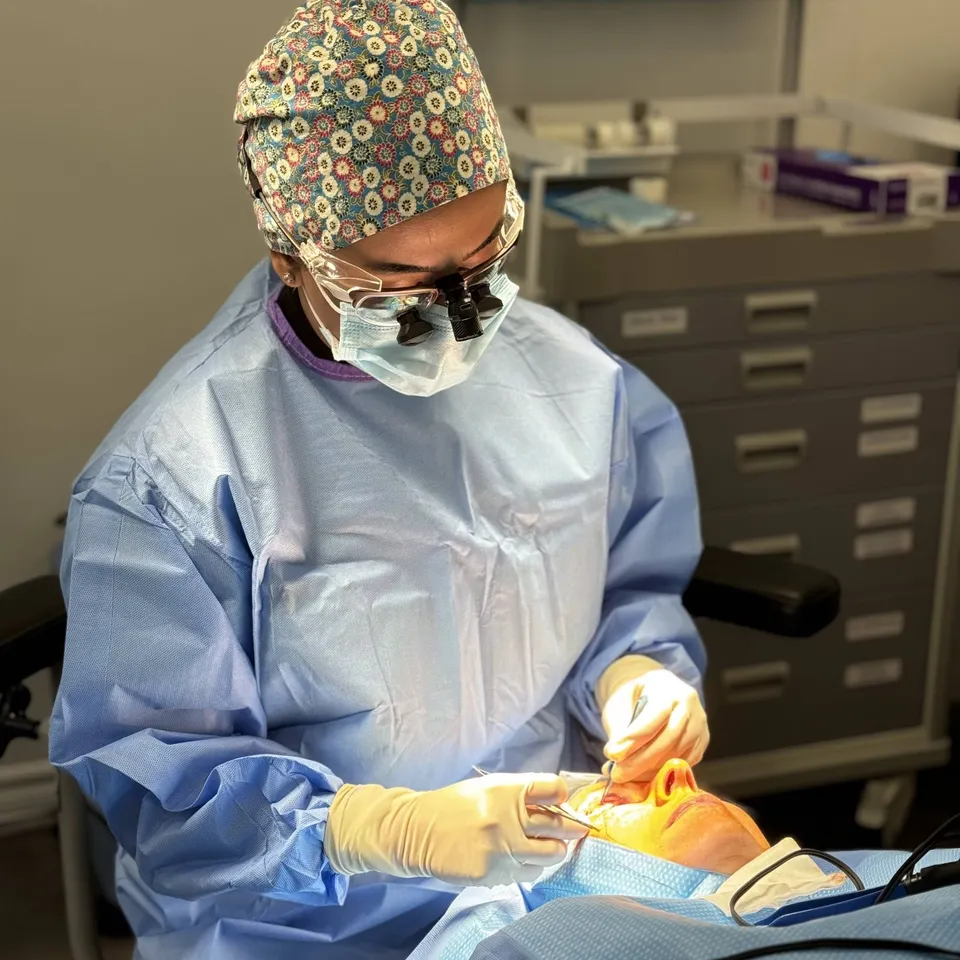
The surgical approach is individualized. In some patients, an incision just below the lash line allows skin and fat to be addressed directly. In others, work through the inner surface of the eyelid avoids an external incision. The plan respects lower eyelid support so the contour looks natural.
Specialist perspective
Lower eyelid surgery is technically demanding because the lower lid relies on delicate support structures. Oculoplastic planning considers lid position, midface anatomy, and ocular surface health so that improvement in contour does not come at the cost of eyelid function or shape.
Outcomes
Results emerge gradually as swelling settles. The intention is a smoother, rested under-eye contour that remains consistent with the patient’s own facial anatomy.
Recovery and timeline
Most patients experience swelling and bruising early after surgery, with improvement over the following weeks. Activity, medication, and follow-up guidance are individualized based on the technique used and the patient’s healing.
Risks and limitations
All surgery carries risks, including bleeding, infection, asymmetry, dryness, and changes in lower eyelid position. Lower blepharoplasty does not treat dark circles caused by skin pigmentation, and the assessment identifies when other approaches may be more appropriate.