
What the procedure addresses
Xanthelasma are soft, flat or slightly raised yellowish plaques that usually form near the inner corners of the upper and lower eyelids. They are made of cholesterol-rich deposits within the skin. They are benign and painless, but they tend to grow slowly and rarely fade on their own, so removal is usually requested because of how they look.
Who may be a good candidate
Excision suits people with established plaques that bother them and enough eyelid skin to allow removal without pulling the lid out of position. The size, depth and location of each plaque, and whether one or several eyelids are affected, guide the choice of treatment.
Xanthelasma can be associated with raised cholesterol, so a blood lipid check with your family doctor is recommended, although many people with xanthelasma have normal levels.
What the procedure involves
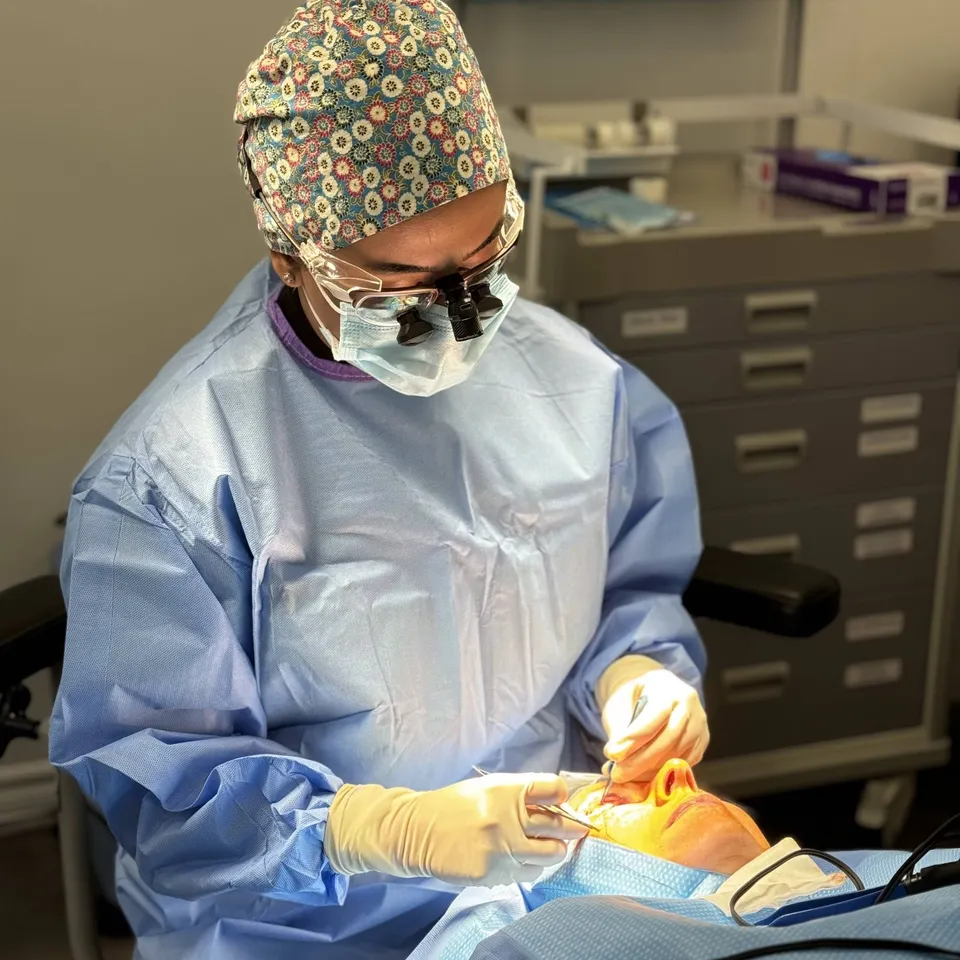
Excision is performed under local freezing. The plaque is removed with a small margin of skin and the wound is closed with fine stitches placed along the natural lines of the eyelid. When the upper eyelids also have excess skin, removal can be combined with upper blepharoplasty so the closure sits within the eyelid crease.
Larger plaques may be removed in stages, or the area may be closed with a small local skin flap or graft, to avoid tension on the eyelid. Removed tissue may be sent for laboratory examination.
Specialist perspective
Eyelid skin is thin and limited. Removing too much, particularly from the lower eyelid, can pull the lid away from the eye or make it harder to close. Planning the excision around eyelid function is what makes oculoplastic expertise relevant. For small, superficial plaques, non-surgical treatments such as laser or chemical treatments may be discussed as alternatives, and the assessment compares these options for your eyelids.
Recovery and timeline
Mild swelling and bruising are common for several days. Stitches are usually removed after about five to seven days. The scar is typically pink at first and fades over several months; protecting it from the sun helps it settle. Specific aftercare, including ointment and activity guidance, is individualized after the procedure.
Risks and limitations
Risks include bleeding, infection, scarring, changes in skin colour, asymmetry and, with larger excisions, changes in eyelid position. Xanthelasma commonly recurs, and new plaques can form elsewhere, particularly when several eyelids are affected. Excision removes existing plaques but does not change the underlying tendency to form them.